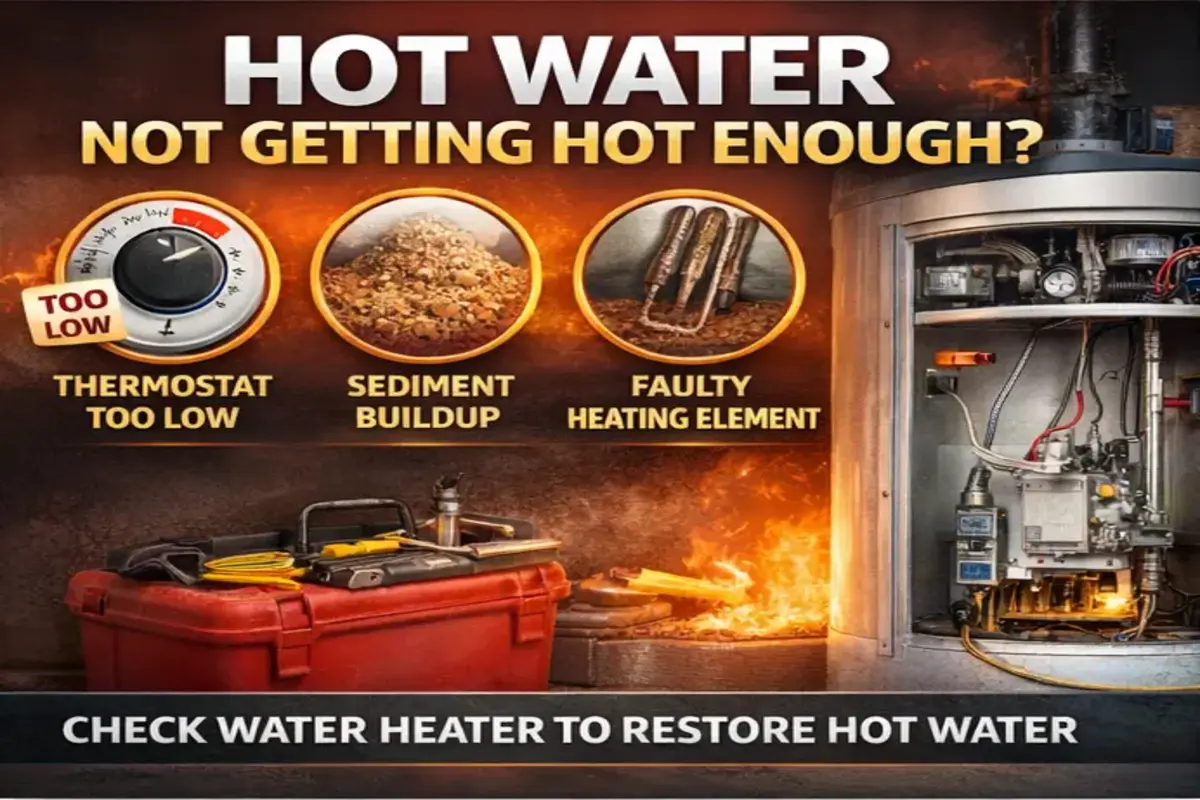
Hot Water Not Getting Hot Enough? Causes, Fixes
Hot water may not get hot enough due to incorrect thermostat settings, sediment buildup in the water heater, faulty heating elements, or problems with gas or electrical supply. These issues reduce heating efficiency over time.
What Does It Mean When Hot Water Is Not Getting Hot?
When hot water feels lukewarm instead of hot, it usually means the water heater is working inefficiently. This is common in many U.S. homes and often develops gradually rather than suddenly.
Common Causes of Hot Water Not Getting Hot Enough
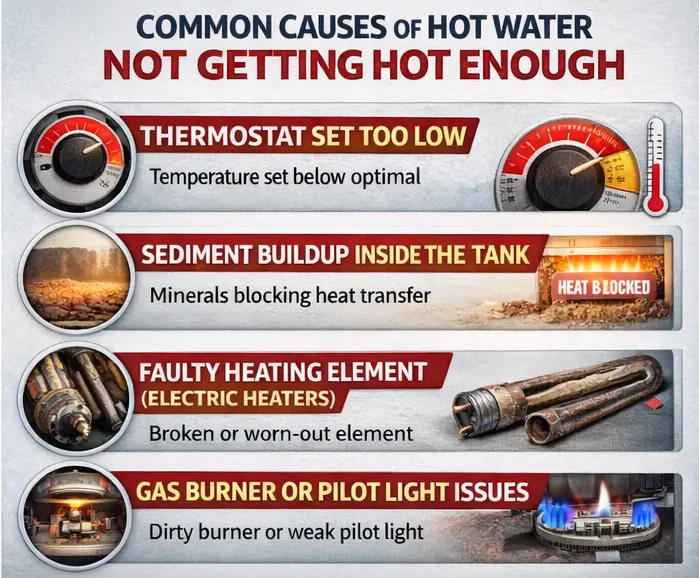
Thermostat Set Too Low
Water heaters are often set below optimal temperature, resulting in lukewarm water.
Sediment Buildup Inside the Tank
Minerals settle at the bottom of the tank and block heat transfer.
Faulty Heating Element (Electric Heaters)
If one element fails, the heater may produce only warm water.
Gas Burner or Pilot Light Issues
Dirty burners or weak pilot lights reduce heating efficiency.
Aging Water Heater
Older units lose efficiency and struggle to maintain proper water temperature.
How to Fix Hot Water That Is Not Hot Enough
Step 1: Check Thermostat Settings
Set to around 120°F, which is common in U.S. households.
Step 2: Flush the Water Heater
Flushing removes sediment and improves heat transfer.
Step 3: Inspect Heating Elements or Burner
Damaged components may need replacement.
Step 4: Check Power or Gas Supply
Ensure breakers, pilot lights, and valves are functioning correctly.
In modern plumbing systems, issues like lukewarm hot water can also be influenced by the type of piping used, and understanding how PEX Pipe works in residential water supply helps homeowners identify potential performance and efficiency concerns.
How Long Should Hot Water Last?
A properly functioning water heater should provide consistent hot water during normal household use. If hot water runs out quickly, internal problems may exist.
Is Lukewarm Hot Water Dangerous?
Lukewarm water itself is not dangerous, but it can indicate internal wear. Ignoring the issue may increase energy costs and shorten the unit’s lifespan.
Final Thoughts
If hot water is not getting hot enough, early troubleshooting can restore comfort and efficiency. Regular maintenance helps prevent costly repairs and ensures reliable hot water in U.S. homes.
FAQs
Why does hot water run out quickly?
Sediment buildup or a failing heating element often causes this issue.
Can sediment affect water temperature?
Yes. Sediment blocks heat transfer and reduces efficiency.
How often should a water heater be serviced?
Most water heaters benefit from yearly maintenance.
Does water pressure affect water temperature?
High demand can reduce temperature consistency.
