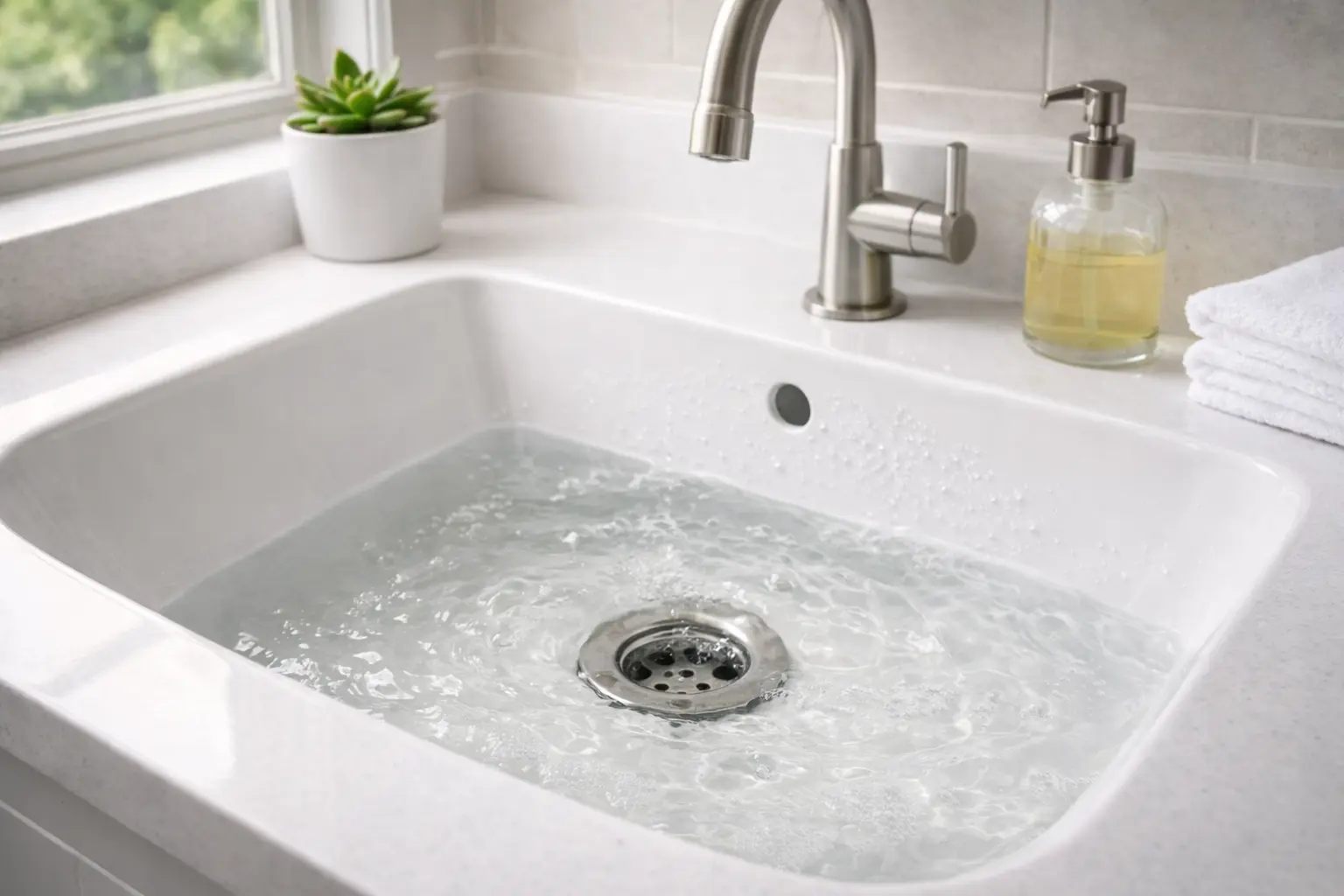
How to Unclog a Drain Without Chemicals (Safe & Natural Methods)?
You can unclog a drain without chemicals by using hot water, baking soda and vinegar, a plunger, a drain snake, or by cleaning the P-trap. These natural methods safely remove buildup like grease, hair, and soap residue without damaging pipes.
Why Avoid Chemical Drain Cleaners?
Chemical drain cleaners may work temporarily, but they can:
- Damage pipes over time
- Harm septic systems
- Create safety risks for skin and lungs
- Fail to remove deeper buildup
That’s why many homeowners prefer non-chemical drain cleaning methods.
Common Causes of Clogged Drains
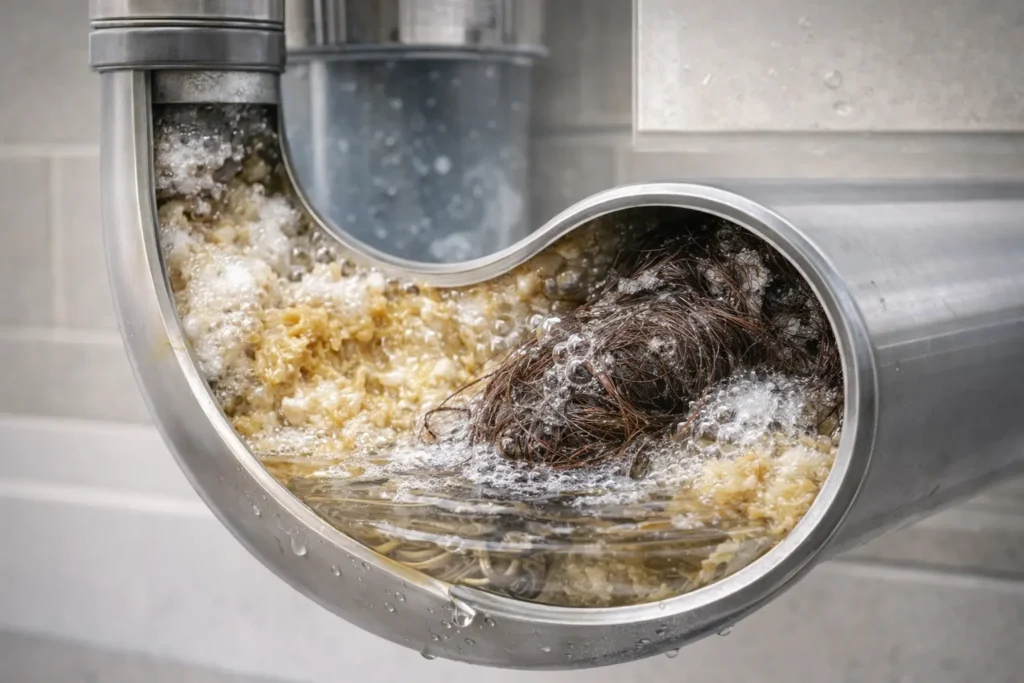
Before fixing the problem, it helps to understand what causes it:
- Hair buildup
- Grease and food residue
- Soap scum
- Mineral deposits from hard water
Most slow or clogged drains are caused by gradual buildup, not sudden blockages.
How to Unclog a Drain Without Chemicals? (Step-by-Step)
1. Flush With Hot Water
Pour hot (not boiling) water slowly down the drain. This helps loosen grease and soap residue stuck to pipe walls.
2. Use Baking Soda and Vinegar
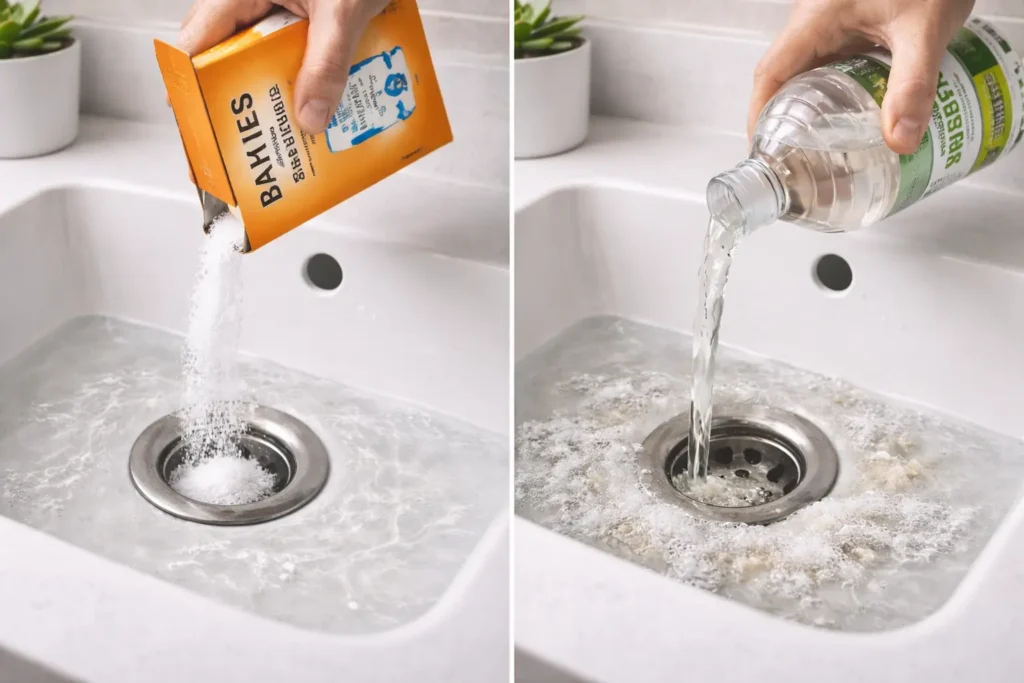
- Pour baking soda into the drain
- Add vinegar
- Cover the drain and wait 15–20 minutes
- Flush with warm water
This natural reaction breaks down buildup safely.
3. Try a Plunger
A plunger creates pressure that can dislodge clogs caused by hair or debris near the drain opening.
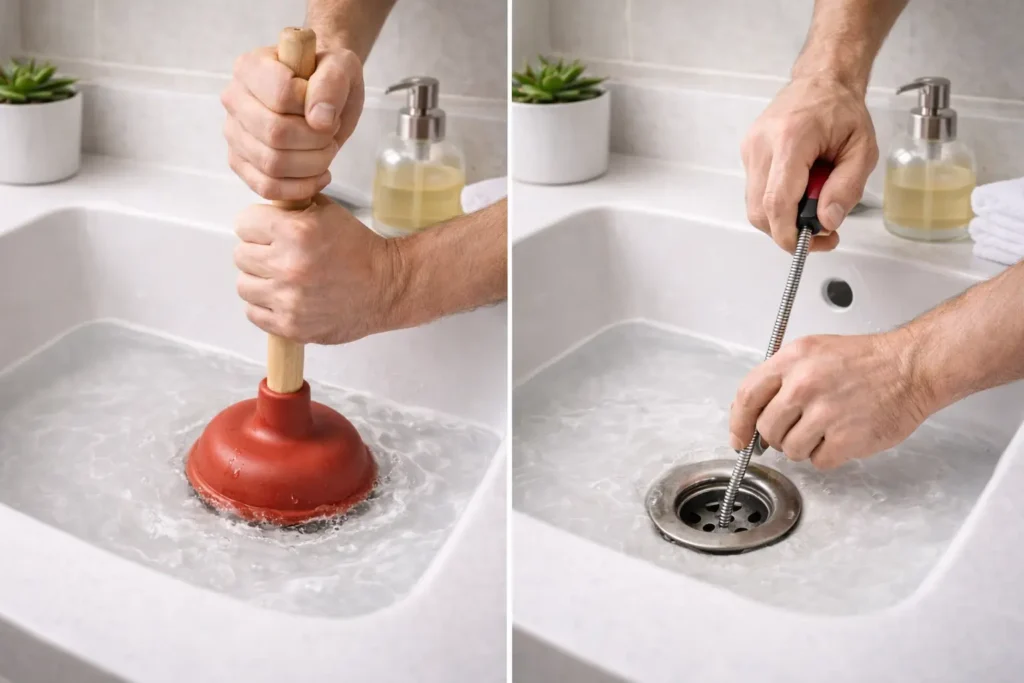
4. Use a Drain Snake or Wire
A simple drain snake or bent wire can pull out hair and debris trapped deeper in the pipe.
5. Clean the P-Trap
Remove the P-trap under the sink and clean it manually. This is often where debris collects.
What If the Drain Is Still Clogged?
If natural methods don’t work, the clog may be deeper in the plumbing system. Multiple slow drains or gurgling sounds may indicate a larger issue that requires professional inspection.
This article is for informational purposes and reviewed for accuracy.
Final Thoughts
Learning how to unclog a drain without chemicals helps protect your plumbing system and your health. Natural methods are effective for most household clogs and reduce the risk of pipe damage over time.
Frequently Asked Questions
Is baking soda and vinegar safe for drains?
Yes. When used occasionally, it is safe for most household plumbing systems.
Can hot water damage pipes?
Very hot or boiling water can damage some pipes. Use hot tap water, not boiling water.
How often should drains be cleaned naturally?
Light maintenance once a month helps prevent buildup and future clogs.


